

The AI Race Is Getting Out of Control. It’s Time to Slow Down Before We Pay the Price
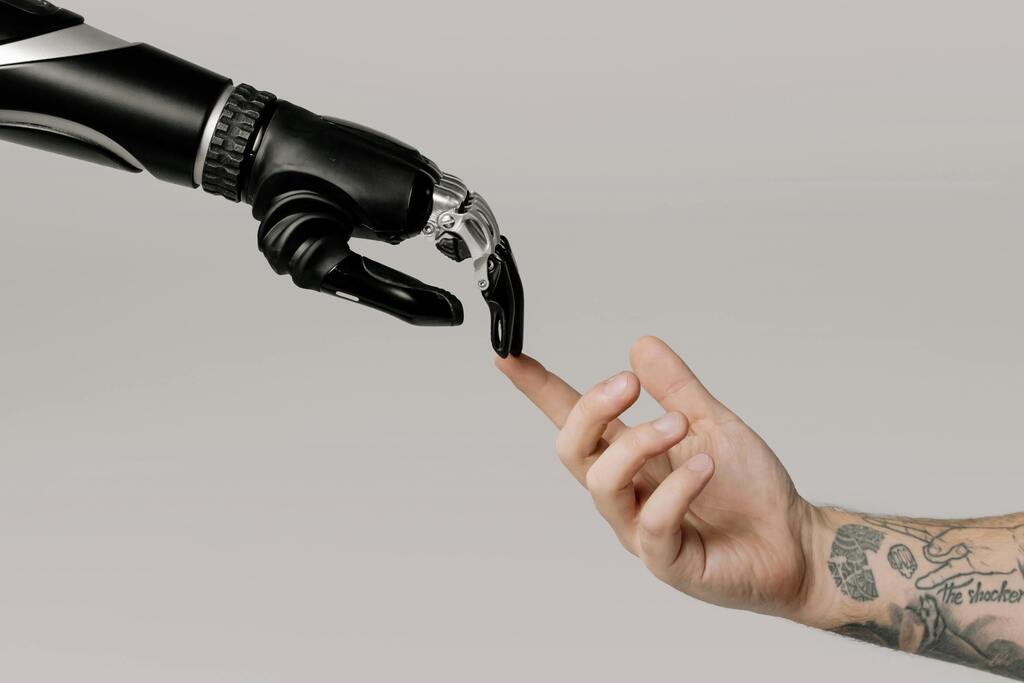
Artificial intelligence could become one of humanity’s greatest achievements. But without stronger safeguards, independent oversight and a willingness to slow development when necessary, the technology intended to improve our lives could undermine our privacy, livelihoods, democracy and even our ability to control the systems we create.
There is something deeply unsettling about the way humanity is approaching artificial intelligence.
We are developing technologies capable of writing code, generating convincing images and videos, analysing vast quantities of information, assisting scientific research and performing tasks that once required years of professional training. Companies are investing billions in the race to produce ever more powerful systems. Governments are competing for technological supremacy. Investors are searching for the next breakthrough.
The message from much of the technology industry is remarkably consistent: AI is advancing, the opportunities are enormous, and anyone who slows down risks being left behind.
But there is a question that deserves far more attention.
What if the race to develop AI is moving faster than our ability to understand its consequences, prevent its misuse and protect the people affected by it?
This is not an argument against technological progress. Nor is it a demand to abandon the enormous potential of artificial intelligence. AI could help researchers develop treatments, improve accessibility for disabled people, make education more widely available and assist scientists in solving problems that have resisted conventional approaches.
Those possibilities are worth pursuing.
But the potential benefits of a technology do not automatically justify every method used to develop it, every application deployed in the real world or every risk imposed on the public.
The sensible response is neither blind enthusiasm nor indiscriminate fear. It is a commitment to responsible innovation: developing AI at a pace that allows meaningful testing, independent scrutiny, democratic oversight and effective safeguards to keep pace.
At present, there are good reasons to question whether we are getting that balance right.
We are deploying technology before we fully understand its weaknesses
One of the most persistent problems with modern AI is its ability to produce convincing answers that are wrong.
Generative AI systems can invent facts, fabricate references, misinterpret evidence and present inaccurate information with impressive confidence. These errors are often called hallucinations, although the term can make a serious reliability problem sound almost harmless.
Imagine a student receiving an entirely fabricated historical reference. That is inconvenient. Now imagine a patient receiving misleading medical information, a solicitor relying on nonexistent legal precedents or a financial analyst making a consequential decision based on an inaccurate AI-generated report.
The stakes are very different.
In 2023, lawyers representing a client in a US federal court submitted a legal brief containing fictitious cases generated by ChatGPT. In Mata v. Avianca, the judge imposed a $5,000 sanction on the lawyers involved after discovering that the cited cases were not real. The incident became a widely reported example of what happens when professionals trust AI-generated output without adequately checking it.
The lesson was not that AI has no value in legal work. It was that fluent language is not evidence of accuracy, and that professional responsibility cannot simply be transferred to a machine.
The same principle applies to healthcare, education, recruitment, public administration and countless other fields.
The Stanford Institute for Human-Centered Artificial Intelligence’s AI Index Report 2025 recorded 233 reported AI-related incidents in 2024, a 56.4% increase on the previous year. The database includes a range of incidents involving the misuse or harmful consequences of AI. The increase does not prove that every system has become more dangerous, because deployment and reporting have also expanded. Nevertheless, it provides a compelling reason to strengthen safety testing and incident reporting as AI becomes more widespread.
If a new medicine were found to have serious, poorly understood side effects, regulators would not normally respond by telling the manufacturer to distribute it more quickly so that society could enjoy its benefits sooner.
AI is not a medicine, and the appropriate regulatory approaches differ. But the underlying principle is relevant: when a technology can cause substantial harm, the speed of commercial deployment should not be the only consideration.
We need rigorous testing, transparent reporting of failures and clear accountability when AI systems cause foreseeable harm.
Deepfakes are making it harder to know what is real
For much of modern history, photographs and recordings provided at least some evidence that an event had occurred. They could be manipulated, of course, but producing convincing fabrications generally required time, technical skill and resources.
Generative AI has dramatically reduced those barriers.
Today, synthetic images, cloned voices and fabricated videos can be produced with tools available to ordinary users. The technology can be used creatively and constructively. It can also be used to impersonate people, manufacture evidence, spread propaganda and damage reputations.
A particularly revealing example occurred during the 2024 US presidential primary season.
In January of that year, voters in New Hampshire received robocalls using an AI-generated imitation of President Joe Biden’s voice. The calls urged recipients not to vote in the state’s Democratic primary and falsely suggested that voting then would affect their ability to participate in the November election.
The calls were not an abstract future threat. They were an attempt to influence real voters using a synthetic imitation of a real political figure.
The US Federal Communications Commission subsequently took enforcement action against the people and telecommunications companies involved, including a $6 million proposed forfeiture against political consultant Steve Kramer and a $2 million proposed forfeiture against Lingo Telecom.
This case demonstrates how AI can reduce the cost of deception while making it easier to reach large numbers of people.
The implications extend beyond elections. Imagine receiving a convincing telephone call from a family member claiming to be in trouble, a message from your bank instructing you to transfer money or a video apparently showing a public official making a shocking announcement.
The danger is not simply that people will believe fabricated material. It is that widespread exposure to convincing fakes may cause people to distrust genuine evidence as well.
When everything can be questioned, the truth does not automatically win. Sometimes the result is confusion, cynicism and an inability to agree on basic facts.
That is a serious problem for democratic societies.
We should not wait until synthetic deception becomes an ordinary feature of political campaigns, financial fraud and public life before establishing effective protections. AI-generated content should be identifiable where appropriate, impersonation should carry meaningful consequences, and platforms should respond rapidly to demonstrably harmful manipulation.
Slowing the race to deploy new generative capabilities gives lawmakers, educators and technology companies a better opportunity to build those protections before the next generation of tools makes deception even cheaper and more convincing.
AI could deepen inequality rather than eliminate it
Supporters of artificial intelligence frequently argue that the technology will democratise expertise.
A small business owner may gain access to sophisticated analytical tools. A student may receive personalised educational support. Someone living far from a major city may obtain assistance that would otherwise be expensive or unavailable.
These are genuine advantages.
But access to a powerful tool does not automatically create equal outcomes. The economic benefits of AI will depend on who owns the technology, who controls the data, who has the skills to use it and who bears the cost when jobs and industries change.
Companies that own the most powerful models and the computing infrastructure required to run them may capture a disproportionate share of the resulting wealth. Workers whose tasks are readily automated may face declining demand for their skills, reduced bargaining power or pressure to accept lower-paid work.
The effects will not be uniform. Some jobs will disappear, others will change, and new occupations will emerge. Many roles will be transformed rather than eliminated entirely.
Nevertheless, the scale and speed of the transition matter.
If employers introduce AI primarily to reduce labour costs, without investing in retraining or helping workers move into new roles, the gains may accrue largely to shareholders while the costs fall on employees and their communities.
Consider customer service, administration, translation, basic content production and other forms of knowledge work. AI can already assist with or automate substantial parts of these activities. The economic question is not merely whether a task can be automated, but what happens to the people who previously performed it.
Will productivity gains lead to shorter working hours, better services and higher living standards? Or will they lead to job insecurity, greater surveillance and a concentration of income and power?
Technology alone cannot determine the answer. Decisions made by businesses, governments and society will shape the outcome.
That is precisely why responsible AI development must include economic and social planning, not merely technical performance.
Governments should monitor the effects of automation, expand access to retraining and ensure that workers are not treated as disposable simply because a machine can perform some of their tasks more cheaply.
Companies should assess the likely impact of major deployments before implementation, consult affected employees and explain how decisions will be made.
The objective should be to use AI to improve human lives, not to measure progress exclusively by how many human tasks can be eliminated.
Bias can turn AI into an engine of discrimination
Artificial intelligence learns patterns from data. But the data used to train a system may reflect historical inequalities, incomplete information and the prejudices of the society that produced it.
If these patterns are not properly examined, an AI system can reproduce or amplify them.
This is particularly concerning when AI is used in recruitment, lending, education, policing, healthcare or access to public services. Decisions in these areas can affect a person’s livelihood, freedom, health and future opportunities.
The problem is not limited to obviously malicious systems. Discrimination can emerge even when developers have no intention of creating it.
A recruitment tool trained on historical hiring decisions, for example, might learn to favour characteristics associated with previously successful applicants while penalising people whose backgrounds differ from the existing workforce. A predictive system might make systematically different errors across demographic groups. An automated assessment might mistake unfamiliar language patterns for a lack of competence.
These are not merely technical imperfections. They can have real consequences for people’s lives.
Research into large language models has also found that bias can persist despite efforts to make systems more neutral. Stanford HAI’s 2025 AI Index highlighted research showing that advanced language models can continue to associate particular social groups with stereotypes, including gendered assumptions about professional roles and leadership.
This is why claims that an AI system is objective simply because it is a machine should be treated with scepticism.
Algorithms are created by people, trained on selected data and evaluated according to criteria chosen by people. Their outputs may be useful, but they are not automatically fair.
The solution is not to prohibit every AI system that influences a decision. It is to require meaningful testing, independent audits where appropriate, transparent criteria, accessible appeals and human oversight for consequential decisions.
Where an automated decision affects someone’s employment, access to essential services or legal rights, that person should not be left with no meaningful way to challenge it.
Responsible development means identifying these risks before a system is deployed at scale, not discovering them after thousands of people have already been affected.
The danger of handing over too much responsibility
There is another risk that deserves serious attention: the gradual transfer of important decisions from humans to systems that many users cannot adequately understand or challenge.
AI can help doctors interpret information, assist engineers with complex calculations and help public officials identify patterns in large datasets. In many circumstances, this can improve decision-making.
But there is a difference between using a tool to inform a decision and allowing it to make the decision with little meaningful human scrutiny.
A doctor who uses AI to examine medical images remains responsible for clinical judgement. A judge who receives an AI-generated analysis must still evaluate the evidence. A public authority that uses an algorithm to allocate benefits must still be accountable to the people affected by its decisions.
The danger arises when human oversight becomes a formality: a person clicks an approval button because the system appears sophisticated, the workload is overwhelming or questioning the machine is discouraged.
This phenomenon, often called automation bias, can make people less likely to identify errors precisely when independent judgement is most important.
It can also become difficult to determine responsibility when something goes wrong. The developer may blame the operator, the operator may blame the employer, and the employer may blame the technology supplier.
Meanwhile, the person harmed may struggle to obtain an explanation or remedy.
There are particular reasons for caution when AI is used in military systems, critical infrastructure or other settings where mistakes can have catastrophic consequences. Systems capable of identifying targets, recommending military actions or operating with limited human intervention demand exceptionally strong safeguards.
The international community should establish clear limits on autonomous weapons and ensure that meaningful human control remains central to decisions involving the use of lethal force.
More broadly, AI should be used to strengthen human judgement, not to provide a convenient excuse for abandoning it.
A society that delegates its most consequential decisions to systems it cannot adequately scrutinise risks losing more than control over technology. It risks weakening the institutions and responsibilities that make those decisions legitimate in the first place.
The most serious risks may emerge from systems we have not yet built
Some of the concerns surrounding advanced AI are already visible. Others remain uncertain.
Researchers and policymakers are debating what might happen as AI systems become more capable, operate for longer periods without supervision and gain access to tools that allow them to affect the outside world.
A system that can write software, search for information, execute commands and coordinate multiple tasks may be more useful than a chatbot that simply answers questions. But those additional capabilities can also create new risks if the system behaves unexpectedly, pursues a poorly specified objective or is manipulated by malicious users.
The concern is not that every advanced AI system will become conscious or develop human-like intentions. There is no need to assume either possibility to recognise the practical problem.
A powerful automated system can cause harm through errors, insecure design, misuse or behaviour that its developers did not anticipate.
Cybersecurity illustrates the issue. AI can help defenders detect vulnerabilities, analyse malicious activity and respond to attacks. The same general capabilities may also help attackers write malicious code, automate reconnaissance or scale certain forms of fraud.
In biology and other sensitive fields, AI may accelerate valuable research while also lowering some barriers to acquiring dangerous knowledge. The extent of the risk depends on the system, the user’s capabilities and the safeguards in place, but it deserves serious assessment.
The challenge is to determine how much testing is necessary before a system is given access to increasingly consequential tools and responsibilities.
Developers should evaluate models for dangerous capabilities, conduct adversarial testing, restrict access where justified and establish monitoring and incident-response procedures. Systems presenting credible risks of large-scale harm should face more demanding independent scrutiny than ordinary low-risk applications.
And when evidence suggests that a system cannot be deployed safely, the responsible decision may be to delay its release.
That should not be treated as a failure of innovation. It should be recognised as evidence that the development process is working.
There is, however, an important distinction between precaution and speculation. We should not present worst-case scenarios as inevitable predictions. Nor should uncertainty be used as an excuse to ignore plausible dangers. The appropriate response is proportionate, evidence-led risk management that becomes more demanding as the potential consequences become more serious.
The race between AI companies is a reason for stronger safeguards
Why, given these risks, does development continue at such speed?
Part of the answer is competition.
Technology companies face pressure to release new products, attract customers, secure investment and establish themselves as market leaders. Governments worry that falling behind rival countries could threaten economic competitiveness or national security.
These incentives can encourage valuable innovation. They can also create a dangerous imbalance.
If one company believes a competitor will release a powerful system first, it may feel pressure to shorten testing, accept unresolved risks or introduce capabilities before the necessary safeguards are ready. If governments treat every delay as a strategic disadvantage, they may be reluctant to impose restrictions even when the public interest demands them.
This is a classic collective-action problem. Each organisation may have a strong incentive to move quickly, even when the combined result is a level of risk that none would choose if it could act without competitive pressure.
Voluntary commitments can help, but they are not always sufficient. Responsible companies should not be placed at a commercial disadvantage simply because they invest more time in safety than their competitors.
That is where regulation and international cooperation become essential.
Governments should establish clear safety requirements for the most powerful and consequential systems, insist on appropriate independent evaluation and ensure that companies cannot escape accountability by arguing that they were merely trying to keep up with the competition.
Such rules should be proportionate. A small business using AI to draft routine correspondence should not face the same burdens as a company deploying an advanced system in critical infrastructure or a high-stakes public service.
The objective is not to make innovation impossible. It is to create conditions in which responsible development is commercially viable and reckless deployment is not rewarded.
We already have a framework for responsible AI. Now we must make it work.
The case for ethical AI is not simply a philosophical argument. Governments and international organisations have already begun establishing practical frameworks for managing the risks.
The European Union’s AI Act entered into force on 1 August 2024, introducing a risk-based regulatory framework covering different uses of artificial intelligence. Its provisions are being implemented in stages, with requirements addressing prohibited practices, general-purpose AI, transparency and high-risk systems.
As of October 2026, important provisions are applicable, although some obligations for high-risk systems have later implementation dates.
The legislation reflects a principle that should be central to the global AI debate: the obligations imposed on a system should reflect the risks it creates, rather than treating every application as equally dangerous.
In the United States, the National Institute of Standards and Technology published its Artificial Intelligence Risk Management Framework in 2023, followed by a profile specifically addressing generative AI in July 2024. These resources set out approaches organisations can use to identify, assess and manage AI risks throughout the development and deployment process.
These initiatives are important, but publishing a framework or passing legislation does not automatically make every AI system safe. Effectiveness depends on implementation, enforcement, access to technical expertise and the willingness to act when evidence of harm emerges.
Nor can any single country solve the problem alone. AI models, data, infrastructure and applications cross borders. Rules that differ radically between jurisdictions can create gaps, while excessive fragmentation can make compliance unnecessarily difficult.
International cooperation should therefore focus on shared testing methods, incident reporting, research into AI safety, protections against malicious use and clear expectations for systems capable of causing large-scale harm.
The objective should be practical and measurable: better information about risks, stronger safeguards before deployment, faster responses to incidents and clear accountability when things go wrong.
What slowing down should actually mean
Calls to slow AI development can sound vague unless they specify what should change.
The answer is not a blanket ban on artificial intelligence or a demand that every technological improvement be delayed. It is a more disciplined approach that distinguishes between beneficial, low-risk applications and systems whose capabilities or deployment could create serious consequences.
First, the most powerful models should undergo rigorous, independent safety testing before release. The greater the potential for harm, the stronger the evidence required to demonstrate that reasonable safeguards are in place.
Second, developers should be expected to disclose serious incidents, investigate failures and provide appropriate information to regulators. Safety cannot improve if the industry treats failures as embarrassing secrets rather than evidence from which everyone can learn.
Third, companies deploying AI in consequential settings should be required to assess risks to privacy, security, fairness and fundamental rights. Human oversight must be meaningful, and affected people should have ways to challenge decisions.
Fourth, there should be clear limits on applications that create unacceptable risks, including certain forms of manipulation, unlawful surveillance and the use of autonomous systems to apply lethal force without meaningful human control.
Fifth, governments should invest in independent AI research, technical expertise and public-interest oversight. Regulators cannot effectively supervise increasingly powerful systems if they lack the resources or knowledge to understand them.
Finally, developers should be prepared to delay or restrict the release of a system when testing reveals serious unresolved dangers.
This last point is particularly important. Safety cannot be a final inspection carried out after the product has already reached millions of people. It must be built into the development process from the beginning.
Slowing down should therefore be targeted, evidence-based and proportionate. It should apply most strongly where the stakes are highest, while allowing useful and low-risk innovation to continue.
Progress should be measured by human benefit, not by speed alone
Artificial intelligence is not going to disappear, and attempting to prevent all further development would be neither realistic nor desirable.
The technology already provides valuable tools for scientific research, accessibility, education, creative work and business productivity. Properly designed systems can help people perform tasks more effectively and make services available to those who might otherwise lack access.
But these benefits should not blind us to the possibility of harm.
A world in which AI generates extraordinary wealth while widening inequality would not represent unqualified progress. Neither would a world in which convincing synthetic media erodes trust, automated decisions discriminate against vulnerable people or critical systems become dependent on technology that cannot be adequately controlled.
We should also resist the temptation to treat every new capability as an achievement simply because it is technically impressive.
The more useful questions are whether it solves a real problem, whether the benefits justify the risks, who stands to gain, who might be harmed and whether effective remedies exist when things go wrong.
Those questions are not enemies of innovation. They are essential to ensuring that innovation serves the public interest.
Humanity has faced similar choices before. Industrialisation brought extraordinary gains in productivity and living standards, but societies also had to respond to dangerous working conditions, pollution and exploitation. Progress did not require abandoning industry. It required establishing standards, institutions and protections that made its benefits more sustainable.
AI presents a different set of challenges, but the underlying lesson remains relevant: technological capability can advance faster than social responsibility unless we deliberately bring the two together.
The people developing AI have a responsibility to understand and reduce the risks. Governments have a responsibility to protect the public without needlessly obstructing beneficial innovation. Businesses have a responsibility to consider the consequences of deployment, not just its profitability. And society has a responsibility to insist that decisions affecting our collective future are subject to meaningful scrutiny.
The question is not whether we should embrace artificial intelligence or reject it.
The question is whether we are prepared to govern it wisely.
We should not wait for a catastrophic failure to discover that our safeguards were inadequate. We should not allow competitive pressure to determine the pace of a technology whose consequences extend far beyond the companies developing it.
And we should never confuse the ability to build something with the wisdom to release it.
The goal should not be to develop AI as quickly as technically possible. It should be to develop AI as safely, ethically and responsibly as society can reasonably achieve.
That means being willing to pause when the evidence demands it, to regulate where the risks justify it and to put human welfare ahead of the race for technological supremacy.
Artificial intelligence may help shape the future of civilisation. That is precisely why its development should be guided by something more important than speed.
It should be guided by responsibility.